Pages

Tuesday, 26 July 2016

Fault message: "Start of injection timing regulation" - Code 17656 in a VW Golf IV (1J5).


Our incident review department has confirmed the solution to a fault that affects the Volkswagen model - GOLF IV Variant (1J5) with 1.9 TDI engine that records a DTC of origin 17656 which tells us that there is a start of injection timing regulation fault in one of the cylinders as its regulation limit has been exceeded. This code is accompanied by various symptoms in the vehicle's engine performance. Below are detailed all the symptoms that appear:
·                     17656 - Start of injection timing regulation. Regulation incorrect. Cylinder 1, 2, 3 or 4. Regulation limits exceeded or below.
·                     Lack of engine power.
·                     Engine malfunctioning.
·                     Difficulty when starting the engine.
·                     Malfunction indicator lamp (MIL) on.


NOTE: This technical note only affects those vehicles equipped with an injection pump.

The following causes may be responsible for the aforementioned symptoms to occur:

·                     The service interval has been exceeded.
·                     There is dirt in the fuel tank and this dirt has clogged the fuel filter.

The solution that our workshop care and support department has successfully carried out is as follows:
·                     Read the fault codes in the engine control unit with the diagnostic tool.
·                     Confirm that the cited fault code is recorded that is mentioned in the symptom field of this technical note.
·                     Check that there is an optimal fuel level.
·                     Ask the customer if they have filled up with a suitable fuel.
·                     Check for leaks in the fuel supply circuit.
·                     Check for fuel impurities and quality.
·                     Replace the fuel filter.
·                     Clear the fault code recorded in the engine control unit.

It should be borne in mind that although the replacement of the fuel filter has prevented the majority of repetitions of this incident in our department, it is possible that the fault is due to another affected component, depending on the symptoms and type of vehicle. 


To be able to extract the fuel gauge correctly, the clips that secure it must be removed with great care. There are three securing clip positions for the fuel gauge which are located as shown in the image.


Tuesday, 19 July 2016

Park assist


Park assist systems are designed to help the driver during parking manoeuvres. The most used systems are those with ultrasonic parking sensors or a rear camera. 


Ultrasonic parking system

This is based on the use of sensors installed in the bumpers distributed strategically to cover a wide area. These sensors are mounted on the rear bumper and optionally on the front and are controlled by a control unit. 


The system is activated automatically on engaging reverse gear, the sensors are activated and emit an ultrasonic pulse that travels through the air. If there is an obstacle, the ultrasonic pulse will rebound from it and return to the sensor which will detect the pulse and inform the control unit. The control unit makes the calculation of the distance to the obstacle based on the time elapsed between the emission and the reception of the pulse. The maximum detection distance is approximately 0.8 to 1 metre.


The control unit emits an acoustic warning so that the driver knows the distance of the obstacle. These warnings are transmitted through independent loudspeakers or through the vehicle's audio system. As the vehicle nears an obstacle, the repeat rate of the audible warning increases. When the object is less than 30 centimetres from the centre of the vehicle’s bumper, the acoustic warning will sound continuously. 


Wednesday, 13 July 2016

Engine fault indicator light on


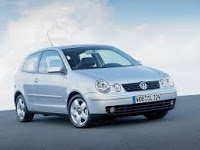
VW POLO 9N / IBIZA 6K

In this post, a fault is considered that causes the engine fault warning light to remain permanently on.


The models that can be affected are the following:

VW POLO 9N Motor 1.4-1.2 (BBY-AZQ) VW POLO 9N Engine 1.4-1.2 (BBY-AZQ)
SEAT IBIZA 6L Motor 1.4-1.2 (BBY-AZQ) SEAT IBIZA 6L Engine 1.4-1.2 (BBY-AZQ)


SYMPTOMS


- The engine fault light comes on.

- The vehicle jerks slightly.

- Excessive fuel consumption.


Tuesday, 5 July 2016

Fault in the fuel flow control solenoid valve – KIA Engine J3 2.9 CRDi


MAKES AND MODELS AFFECTED


KIA:
KIA CARNIVAL / GRAND CARNIVAL III (VQ) 2.9 CRDi (J3) 136 kW (185 CV) ’06-

The manufacturing date of the affected vehicles: 
03.2006 (start of production) to 10.12.2007.


SYMPTOMS

The symptoms that may be found are the following:
Engine fault indicator light (EOBD) on.
Fault message on the instrument panel multifunction screen.
The engine control unit enters an emergency/reduced power phase.

The following fault code is recorded on the diagnostics machine:

P0088 – Pressure too high in the fuel common rail. 

There may be more associated fault codes seen on the diagnostic machine.

Tuesday, 28 June 2016

Fault: Codes B1012 and B1020 on reading the CIM of an Opel Vectra C


The vehicle displays two specific fault codes in the control unit integrated into the steering column:

B1012 – Steering wheel angle sensor not calibrated.

B1020 – Steering wheel angle sensor. Functioning or limit value problem.

The fault indicator light for the stability control system (ESP) is on on the instrument panel when driving the vehicle.

The warning indicator light for the electro-hydraulic steering system (EHPS) is on on the instrument panel.


The indicator light stalk may malfunction, it does not return to its initial position.


 The cause of this fault is nothing more than a internal failure of the steering angle sensor (SAS), which is located inside the control unit (CIM) integrated in the electro-hydraulic power steering column (EHPS system). Unfortunately, due to the soldering of the sensor in the unit, it is not possible to repair it separately to reduce the cost of the fault repair, the complete module (CIM) must be replaced with an up-to-date version.

Monday, 20 June 2016

Checking power supplies

We are going to do a bit of revision, and what better than an everyday example:

A vehicle comes into our workshop that does not start or does so with difficulty.


We verify that it does not start, and then the first thing we do is check the existing or stored errors using the diagnostic apparatus.


 On the diagnostic machine we see that there is an injection relay error. Next, and due to the ease of testing another relay, we replace this relay to see if it is indeed malfunctioning (this is a common 20 amp relay, and there are bound to be some in the workshop), we fit the new relay and test it.
The car continues to have the fault and does not start, there is no other option but to start checking the installation.

Wednesday, 15 June 2016

Evolution of exhaust systems between 1990 and 2014. Euro standard

Exhaust system technology has evolved continuously as a result of European environmental requirements. The purpose of all of these requirements is to control the levels of polluting gas emissions and noise from all vehicles sold in the European Union. The way in which vehicles are checked for compliance with the standards after sale is to check them at vehicle technical inspection centres (ITV/MOT). The controls required of the manufacturers have obliged them to create new exhaust systems to reduce the amount of polluting gas emissions to the atmosphere.

Evolution table of the EURO standards for control of exhaust gas emissions.


Tuesday, 31 May 2016

Carbon fibre

The specialised use of the material in the world of competition, as well as the advance of the technology has resulted in carbon fire being more common in the automotive field.

Until a few years ago, this synthetic material was exclusively used in aeronautics and the world of top competition. Now, we can find this material anyway from supercars to everyday objects such as bicycles, watches, etc.
First, we must remember that carbon fibre is a synthetic fibre made up of filaments which measure from 5 to 10 µm in diameter. Each one of these is the union of thousands of carbon fibres manufactured from polyacrylonitrile.


The properties of carbon fibre are: 

·                     High mechanical strength (3 times greater than that of steel) with a high modulus of elasticity
·                     Low density in comparison with other materials: The density of carbon fibre is 1750 kg/m³, while that of steel is 7850 kg/m³.
·                     Resistance to external agents (corrosion, oxidation, etc.).
·                     High thermal insulation capacity.
·                     Resistance to temperature variations, it maintains its shape only if a thermostable matrix is used.
·                     It is a semiconductor.
·                     High price in comparison with other materials. Currently, a kg of carbon fibre is around €100, while the price per kg of steel is 2 to 5 € approximately.
·                     The main application is the manufacturer of composite materials with thermostable polymers such as epoxy resin, although it can be associated with others such as polyester or vinyl ester.

Tuesday, 24 May 2016

High idling speed accompanied by oil leaks, lack of power and fault codes on VAG 2.0 TFSI vehicles

AFFECTED MODELS


On some models from the VAG manufacturer with 2.0 TFSI (Turbocharged Fuel Stratified Injection) engine, with BWA, BPY and BYD engine management, it is likely that the following fault will be found:

Firstly, after repeated incidents, a list of recorded fault codes became evident in the engine control unit that could occur: 

P0507 – Idle control fault.
P2279 – Leak in the air intake system.

·                     In this fault, constant oil leaks are identified at the rear of the engine and in the spark plug locations. It is possible that fuel may be found in the spark plug area due to a loosening of the cylinder head bolts as a result of excessive pressure in the lubrication circuit.
·                     The valve intended to retain the crankcase vapours (PCV), that is joined to the cylinder head cover does not function correctly, specifically the internal membrane of the non-return valve. This PCV internal fault allows the turbo pressure to enter the oil vapour circuit.
·                     The model of the crankcase oil vapour purge valve must be checked and the metal hose doser that runs from the turbocharger to the intake manifold. There are specific spares for these two parts to solve this fault.

Tuesday, 17 May 2016

Engine malfunctioning without recording of fault codes

On this occasion, we are going to repair a fault that affects the BMW 3 series with M57 and M57N diesel engine.

SYMPTOMS


The engine malfunctions during different operating phases, for example, while accelerating, on starting the engine from cold and/or when travelling at a constant speed at low rpm.

After carrying out a diagnostic reading, no fault code can be seen recorded relating to the engine problems.

One of the causes of this anomaly is that there is a deterioration in the fuel rail sensor connector or in the sensor wiring.


Related Posts Plugin for WordPress, Blogger...